


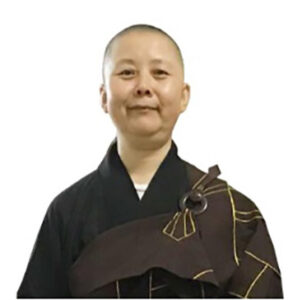
Contributed by the Buddhas’ Practice Incorporated, Australia
Mentor: Bennie Spirit
Editor: Yinyue(Ivy)
With gratitude to Google AI Gemini
With gratitude to NotebookLM
Draft Date: July 30, 2026
Location: BPI Meditation Center
Attendees at the Dharma assembly: Bennie, Ivy, Ellie, Grace, Enid, Dawn, Wujing, Aima
Theory
The so-called ‘shattering the void’ refers to breaking through the Five Aggregates (pañcaskandha). The final section of the *Śūraṅgama Sūtra* breaks through form (rūpa), sensation (vedanā), perception (saṃjñā), volition (saṃskāra), and consciousness (vijñāna), completely obliterating them, until eventually even ’emptiness’ (śūnyatā) itself is shattered. At this moment, you finally realize that your eternal bliss and peace have been right there all along; it is just that ordinarily, you are wholeheartedly seeking suffering and obstacles, never once paying attention to your inherently complete peace and joy. Now, you have finally experienced your inherently complete peace and joy.
The originally complete capacities of the marvelous bright true mind—including various spiritual powers (abhijñā), transformations, wisdom (prajñā), and merits (puṇya)—are all something you possess inherently; it is a complete set. However, people have never realized that they possess these. Everyone just blindly rushes forward, groping their way ahead, groping from today to tomorrow, and from tomorrow to the day after. Because they cannot see, they can only grope forward blindly—day after day, year after year, lifetime after lifetime…. If you open your own inner treasure (Tathāgatagarbha), you will discover that you lack nothing. When you merely grope forward, just getting by day to day, you feel that you lack everything (lacking everything that is good and joyful).
Do you realize right now what exactly everything that manifests truly is? Have you discovered and recognized that ‘you’ who is neither arising nor ceasing, neither increasing nor decreasing, neither defiled nor immaculate, and who never changes? If you have discovered this and dare to acknowledge that this is your true self, then you have truly stepped onto the right path.
Dialogue / Examination
B: Wu Jing, is this name ultimately you or not?
W: It is not me. Then who am I?
B: Is your body you?
W: It is temporarily my body. How should I understand this? It seems to be.
B: Are you certain? The Buddha Dharma is even more rigorous than science; it requires logical proof. You must prove that it is you, and you must repeatedly verify that it is definitively you. The Buddha Dharma is more scientific than science itself, demanding a thorough verification of whether you are ultimately you. Now I ask, is the body you?
W: It is me, but I cannot prove it.
B: You must prove it.
W: Then it is not me.
B: Even if it is not you, you must still prove it.
W: I cannot find any proof at all.
B: How do you prove it? Just as you had to construct arguments when studying in the past, you can use any method to prove that it is you, or that it is not you. Let us use deductive reasoning: if the body at this very moment is you, then many years ago, when we first met, was that body you?
W: It is one body.
B: Is it the same body?
W: No, because I have aged, and changes have occurred. I was young back then.
B: The cells from that time no longer exist, and even the bones no longer exist as they were. That complete “you” is gone; how can you say this is you? That is to say, the you I met initially is not the you of today. We can prove this with the help of science; the you right now is not the you from our first meeting. Are the present you and the past you the same one?
W: No.
B: Do you dare to say with certainty that they are not? You must prove it. Is there any part of the you from that time still here now?
W: A part of it.
B: Which part?
W: Searching… I just know that a person visibly ages. I feel like I’ve shrunk now, and my skin isn’t as good as before, but… the body has changed, hasn’t the mind remained unchanged?
B: How is it the mind of the past? If it were still that same mind, she (your daughter) did not exist back then. If it were still that mind, she would not exist to you now either.
W: Right, it has all changed.
B: So there is not a single trace of the past you left?
W: No. If it were still the same, I wouldn’t have a child.
B: Incorrect. You still have something that is unchanging, and you need to explore and discover it.
W: Everything around me seems to be changing; what is it that remains unchanged?
B: Use the process of elimination. Exclude everything that changes, and what remains is the unchanging you. Since you have studied, you should remember the process of elimination.
W: I have that feeling that something hasn’t changed, but what is it? It seems that from the inside out, both body and mind have changed, they are in motion, and my understanding is different from before.
B: If you find that which is unchanging, you will “shatter the void and smile broadly.” If you haven’t found it, then reverse this saying to “failing to shatter the void, your face is full of suffering.” This question is worth pondering; have you seen the movie *Master Bodhidharma*? He worked on this very point for many years and finally figured it out. Shattering the void and smiling broadly, his exquisite treasures were right there. Right within you, there is something absolutely unchanging; she has it too, and I have it as well. “Everyone has a Spirit Vulture Peak (Gṛdhrakūṭa) Stupa; one should cultivate beneath the Spirit Vulture Peak Stupa.”
W: That fundamental nature (Buddha-nature)?
B: Where is it? Try to dig it out today.
W: It is a formless thing; it has no substance.
B: What do you mean by substance? What do you mean by formless? Does a table have form? Does it have physical reality? You think it has substance, but in fact, it is merely a phenomenon in the process of evolution.
W: Yes, because there are small things inside moving at all times.
B: Hmm, electrons, nuclei. It is not dead, and it is constantly changing.
W: It’s different from a person. A person is alive; it is dead.
B: That is what you think. From the perspective of change, everything is changing. From the perspective of nuclei and electrons, they are all in motion. Every molecule in the table is moving; how is it dead? They are all alive. They all have a half-life and will eventually decay and perish. Let us not argue now about what is dead or alive. The point is that you must find out that unchanging thing amidst the constant changes—that alone is the true you, me, and them. If you cannot even figure out your true self, and all day long you take the unreal as yourself, then wherever you go you deceive people by saying, “This is me.” As a result, you change ceaselessly, yet the next day you still say it’s you. The you of yesterday is not the you of today, so how can you still say it is you? If you claim these changing phenomena are you, you are deceiving people. That moment can only remain in that moment, because cells are constantly metabolizing, undergoing birth and death, so time cannot be retained for even a moment. It changes incessantly, so you cannot say the changing phenomena are yourself. However, the true protagonist is always the unchanging one. The true you is absolutely unchanging, immutable through the ages. Today, I leave this topic for you to discuss. When you have free time, just ponder: Who am I? Who is me? Is the body me? Is the thinking mind me? Who am I? What am I ultimately? Have you ever changed? That you are unchanging is the truth. The moment you attain enlightenment (Bodhi), you elevate yourself to the level of Buddhas and Bodhisattvas, and your future prospects will be inconceivable (acintya).
ENDING
See webpage for details