


Why We Make Offerings to Buddha Statues
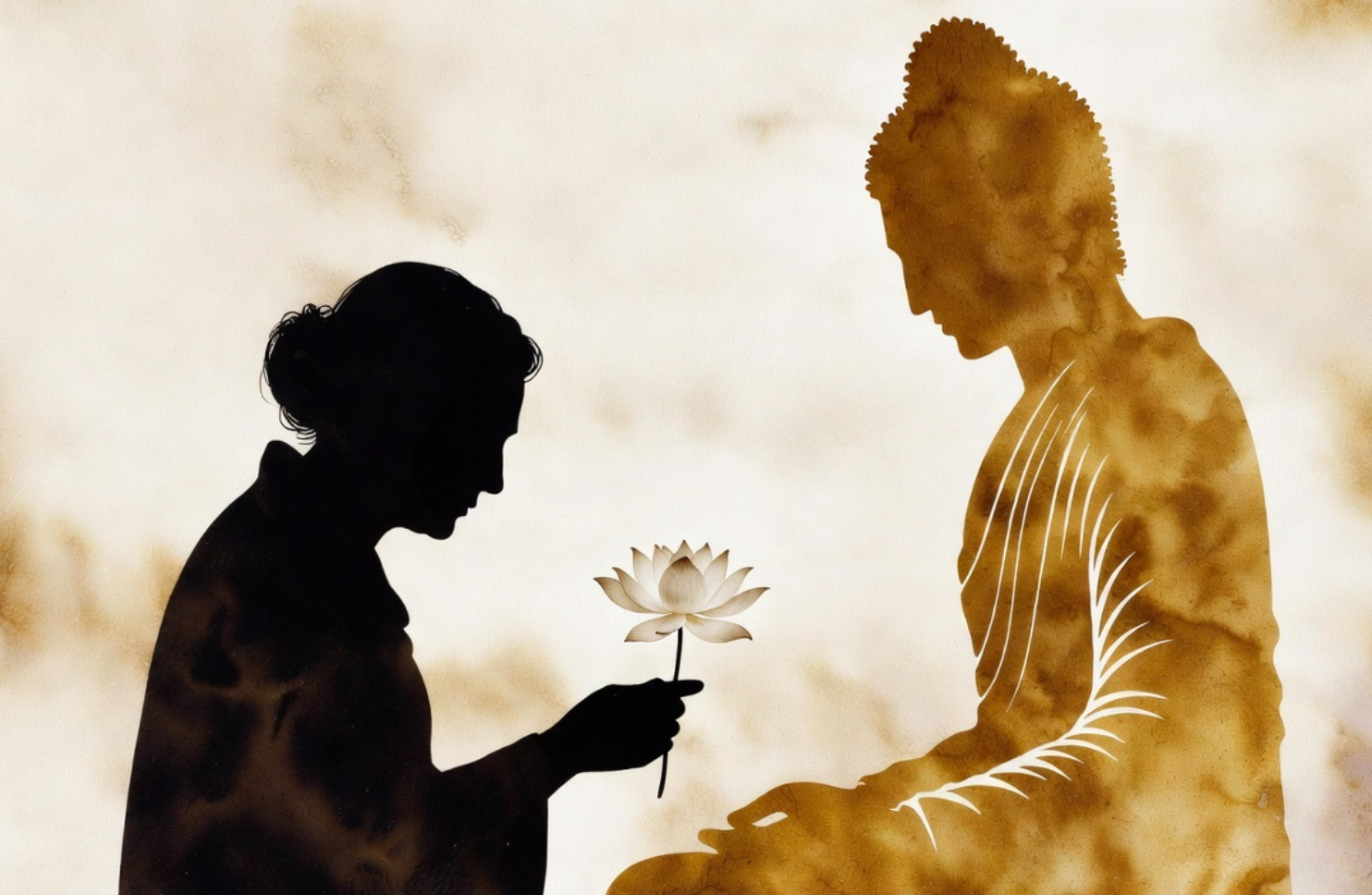
The “Screen” of Wisdom
When first encountering Buddhism, many people wonder: Buddha statues are made of clay or wood. They don’t eat the fruit we offer or smell the incense. What exactly are we making offerings to? Is it just an empty formality?
The Sutra of the Inconceivable Realm of the Tathāgatas reveals a highly accessible truth: The Buddha statue is simply a “medium,” much like the “screen” on our phone or computer.
Imagine a computer with vast amounts of information and powerful functions. If it didn’t have a screen, you wouldn’t be able to see, touch, or use any of it. Similarly, the wisdom and merit of the Buddha pervade the universe, but for ordinary people, this is too abstract, and we rarely even have the chance to think of the Buddha in our daily lives. Therefore, we need a visible, tangible “screen” like a Buddha statue.
It is like looking at a photograph of a family member. The photograph itself is just a piece of paper; it won’t speak to you or do things for you. Yet, it holds great value because it instantly brings that person to mind, reminding you of what they said and did. Looking at a Buddha statue is exactly the same. We are not worshipping a piece of wood or stone; rather, through the statue, we recall the Buddha’s compassion and the profound truths He taught.
Expanding the Heart
So, what should be in our minds when we offer incense or flowers? The teachings offer a method to “expand our hearts”: Do not limit yourself to thinking, “I am only offering flowers to this single statue before me.” Instead, visualize that making an offering to this one Buddha is equal to making an offering to all Buddhas in the ten directions. It is just like entering the correct URL into a browser; as long as your intention is accurately aligned, you can instantly connect to the vast wisdom network of all Buddhas and Bodhisattvas.
Some might ask: Is it really useful to offer just one flower or one cup of water every day? The teachings explicitly say: Yes. If you offer one flower, you establish the karmic connection of that one flower.
Building a Karmic Connection
The core purpose here is to “establish a karmic connection”. If we observe life closely, why do people find eating, drinking, and playing so effortless and fascinating? It is because we constantly obey and satisfy these desires. In essence, we are continuously “making offerings” to worldly pleasures, thereby building deep karmic connections with them.
If we want to purify our minds and awaken our wisdom, we must actively cultivate this profound, wholesome connection with the Dharma. At first, it might feel like a deliberate habit, but as you continuously make offerings and draw near to the teachings, your “karmic connection” deepens. You will realize that spiritual practice is no longer a dry chore. You will naturally develop a strong interest in the Dharma and effortlessly experience inner peace and joy.
Therefore, that wisp of incense and cup of water on the altar are not merely expressions of respect. They are the keys for us to establish a connection with the Buddhas and Bodhisattvas and unlock our own innate wisdom.
Dedication
May all who read this understand the true meaning of making offerings. May we use the visible forms of this world to awaken the invisible wisdom within our hearts. Through sincere offerings, may we establish deep, wholesome connections with the Dharma, purify our minds, and swiftly attain ultimate liberation.